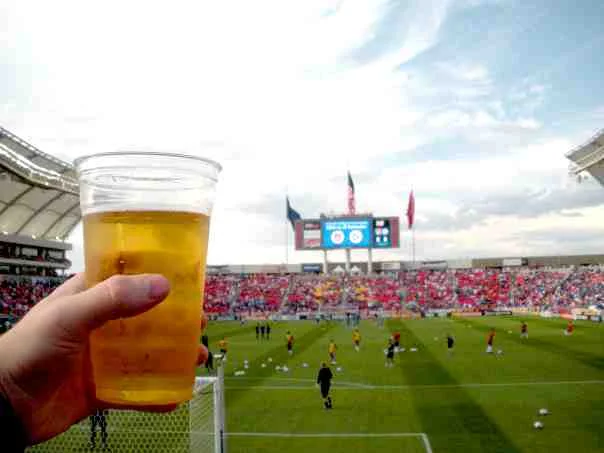
WSL clubs will be able to let fans drink alcohol in view of the pitch from the 2026/27 season. That changes a familiar part of the matchday experience: supporters may be able to take a drink to their seats instead of being limited by restrictions around watching from the stands. The shift gives clubs control over a policy long shaped by restrictions in the men’s professional game, while leaving each venue to decide what suits its supporters. It’s a meaningful change in who gets to make the decision, even if it doesn’t require every club to change its rules.
Trial support grew
The change follows an 18-month trial that began in WSL 2 in January 2025. Birmingham City, Bristol City, Newcastle United and Southampton took part initially; the scheme later expanded to clubs in both tiers. By the end of the 2025/26 campaign, 20 clubs had offered alcohol across 29 venues and almost 200 fixtures. That spread gave the league experience across more than a handful of matches, though the figures alone don’t tell us how consistently each venue ran the policy or how supporters’ experiences differed from ground to ground.
More than 4,000 supporters were surveyed during the trial. Support for drinking in the stands rose from 58% before the 2025/26 season to 69% by its end. League officials described the trial as popular and successful. The increase is notable, but it measures reported support, not whether every supporter wants the same thing or whether the policy changed attendance. Here’s the thing: approval gives clubs a reason to consider the option, but it doesn’t settle the practical questions of how to manage it.
Clubs set their own policies
Permission is optional. Clubs can keep existing restrictions or set policies around their venue and supporter preferences. That local control matters because a rule that works at one ground may not fit another’s layout, routines or crowd. The league’s decision creates room for clubs to make that call for themselves, rather than treating every venue as though it has the same matchday needs.
Shared grounds may present a particular complication, since different rules apply to men’s matches. A venue may need to make clear which policy applies on which matchday, and how supporters will encounter that policy when they arrive. The source doesn’t specify how clubs will handle those details, so the implementation will matter as much as the permission itself. (And this is the part most people overlook.) A change can be popular in principle while still depending on clear communication and workable arrangements at each ground.
The WSL says improving the matchday experience remains a goal, with preserving the game’s family-friendly atmosphere a priority. Those aims aren’t necessarily at odds, but clubs will have to decide how to balance them in practice. Supporters who welcome a drink in view of the pitch may value a more flexible experience; others may prefer existing restrictions. There’s no single policy that will automatically suit every crowd.
Independence brings opportunity and responsibility
The policy change reflects the women’s professional game’s growing operational independence. Since WSL Football was established in 2024, the league has had more scope to test commercial and operational approaches distinct from those used in the men’s game. The trial is one example of that room to experiment: it let the league gather experience and supporter feedback before giving clubs the choice to adopt the policy more widely.
Allowing alcohol in the stands could also create another source of revenue as clubs pursue sustainable growth. But permission isn’t the same as proof of a financial return. The source gives no figures on sales or income from the trial, so the commercial effect remains unclear. Clubs will have to weigh any potential benefit against the practical work involved and the priorities they’ve set for their own matchdays. This is more significant than it looks: the league is giving clubs discretion over a visible part of the supporter experience, while leaving them accountable for how that choice fits their venue.
If you’re working in this space, the clearest signal is that the league is prepared to let clubs test different approaches within a shared framework. The next question is how many choose to do so once the trial ends. The rise in surveyed support suggests there’s an audience for the change, but clubs’ decisions will reveal whether that sentiment translates into routine policy. Some may opt in; others may decide their existing approach serves their supporters better. A choice, not a mandate.
Club decisions will shape the next season
The WSL’s season opener is scheduled for the weekend of September 4. The choice now passes to individual clubs, whose decisions will show how widely the trial’s rising supporter approval translates into regular matchday policy. That season will offer a clearer view of how clubs handle the option once it’s no longer confined to a trial, although the source doesn’t say how the league will assess those decisions or their effects.
For supporters, the immediate point is simple: the new policy allows a change, but doesn’t promise one at every ground. Clubs will set their own rules, and those rules may reflect local preferences as much as league-wide support. The trial has given the WSL evidence of rising approval. What happens next depends on how each club reads that evidence—and what its supporters want on matchday.
Contact the writer of this story, Harry Ewing, at [email protected]