Giovanni Malagò takes charge of Italian football with a clear test ahead: rebuild a federation shaken by Italy’s third consecutive failure to qualify for the World Cup. The result has turned a leadership change into a test of whether the federation can address problems that have outlasted a single coach or qualifying campaign. Malagò inherits an organization under pressure to explain repeated failure and to show that its response reaches beyond appointing a new manager.
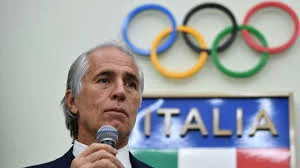
Malagò won 68.58% of the vote in the FIGC election, defeating former federation president Giancarlo Abete, who received 29.17%. The margin gives the new president a clear electoral mandate, though winning a vote and building agreement across a federation are different tasks. A strong result can settle who leads; it can't, by itself, settle which reforms should come first or how they should be carried out.
Multiple sources say FIFA president Gianni Infantino took a keen interest in the contest, to the point of influencing the vote. That account places the election in a wider football context, where national federations operate alongside powerful international institutions. The available facts don't establish the precise nature or effect of that involvement, so the question for Malagò is less about the reported attention than about whether he can make decisions that command confidence among the federation's own constituencies.
The new president’s immediate task is to appoint a manager for Italy’s national team. Genaro Gattuso has left the role, with former AC Milan midfielder Roberto Mancini and Antonio Conte reportedly among the leading candidates. The choice will matter because a national team manager is the most visible face of any reset, but visibility can also create unrealistic expectations. A new appointment may offer a fresh start; it won't explain, on its own, why Italy has now missed three consecutive World Cups.
Reform and federation unity
Malagò, an International Olympic Committee member and former president of the Italian Olympic Committee, previously chaired the organising committee for the Milan Cortina Olympics. He succeeds Gabriele Gravina, who resigned after Italy’s playoff elimination by Bosnia and Herzegovina. That background gives Malagò experience in sports administration and major-event planning. It doesn't automatically resolve the different pressures inside a football federation, where decisions about the national team sit beside longer-running technical and structural questions.
“The priority is to bring the Federation team together,” Malagò said. Gravina, he added, had found it difficult to advance reforms despite receiving “almost unanimous support.” That observation points to a familiar problem in large sports organizations: agreement in principle can conceal disagreements about priorities, responsibility and implementation. Getting people to endorse change is one step; getting them to accept specific changes, and then carry them out, is harder.
Malagò said the federation must address technical and sporting issues, as well as rebuild ties with parts of the political world. Those are broad responsibilities, and the breadth itself is revealing. The problems facing Italian football aren't described as a matter of coaching alone. They also involve how the federation works with its wider sporting and political environment, and whether it can coordinate people whose interests may not always align.
He also called for urgent action on structural problems in Italian football, saying reform would require a different mindset and a genuine willingness to change. The statement sets an ambitious direction but leaves the practical test open: which problems will be tackled first, who will be responsible, and how will progress be judged? Without answers to those questions, calls for a new mindset risk remaining a message of intent rather than a program of work.
The World Cup setback has intensified pressure on the federation: Italy missed qualification even as the tournament expanded to 48 teams for the first time. That makes the failure harder to treat as a narrow disappointment. The expanded format changes the context in which the result is judged, but it doesn't identify the causes or point to a single remedy. (And this is the part most people overlook.) A painful result can create urgency, but urgency doesn't guarantee that an organization will choose the right problems to solve.
Euro 2032 preparations
Co-hosting Euro 2032 is another major challenge. Malagò said he had already spoken with UEFA, Michele Uva and UEFA president Aleksander Čeferin. “We cannot afford to fall short,” he said. The comment makes clear that the tournament is already part of the new president's agenda, alongside the immediate demands of the national team and federation reform.
Hosting a major tournament calls for coordination across organizations and sustained preparation. The source doesn't specify the tasks still outstanding, so the significance here is the scale of the commitment rather than any particular timetable or obstacle. Malagò's experience with the Milan Cortina Olympics may be relevant to organizing a major event, but the Euro challenge will also test the federation's ability to work with UEFA and its domestic partners over time.
The test beyond the next appointment
Here's the thing: the manager appointment will attract attention because it offers a clear name and an immediate decision. Reform is less tidy. It involves the federation's ability to turn stated priorities into decisions that hold together across technical, sporting and political relationships. This is more significant than it looks: after three consecutive World Cup failures, the standard for a credible response is likely to be whether the federation can show a direction that lasts beyond the next result.
If you're working in this space, watch how Malagò defines the federation's priorities and whether his call for unity produces a workable approach to change. The vote gives him authority to lead, while the comments about Gravina's difficulty advancing reforms suggest that authority alone may not be enough. He'll need to build cooperation around concrete choices, even when agreement becomes more difficult than the election result might suggest.
And yet, the first decisions will carry unusual weight precisely because expectations are high. A manager will have to be appointed, and preparations for Euro 2032 will continue. The deeper measure will be whether those immediate demands fit within a broader effort to address the structural issues Malagò has identified. A new president, a new coach, and a difficult program ahead.
His first decisions will show whether the federation can turn that urgency into coordinated action. The challenge isn't simply to promise a reset, but to make the federation's different priorities reinforce one another rather than compete for attention. Whether Malagò can do that remains an open question.
Contact the writer of this story, Samindra Kunti, at [email protected]