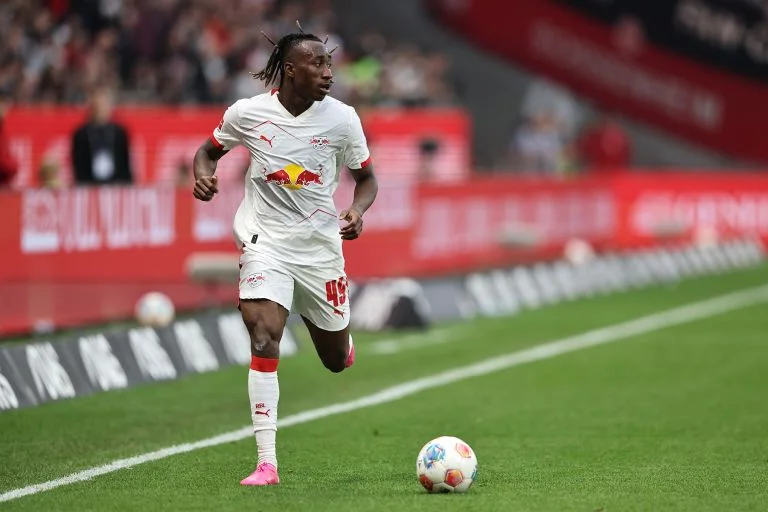
PSG’s pursuit of Yan Diomande has advanced from scouting to direct negotiations, with the club seeking an immediate transfer and Leipzig holding out for a fee above €100 million. Those positions put the fee at the center of the story: PSG can compete financially, but the report says the club isn’t expected to pay more than it believes the winger is worth.
Fabrizio Romano reports that PSG are “in talks” with Leipzig after agreeing personal terms with Diomande. That agreement is a meaningful step, since it suggests the player’s side and the club have found common ground on the conditions of a move. It doesn’t settle the harder question, though. Leipzig controls the terms of a transfer, and the clubs still need to agree on what those terms are.
Liverpool had also been linked with Diomande and, according to the report, had offered a sum close to Leipzig’s asking price. That gives the negotiation a competitive edge, even if the available information doesn’t establish whether Liverpool’s interest is still active or what its next move might be. For PSG, the reported offer matters because it helps explain the pressure around the valuation. A rival’s willingness to approach the asking price can make it harder to negotiate a discount.
Leipzig’s price and PSG’s timing
Leipzig could consider a lower fee if Diomande stayed at the club on loan for a year. PSG “want Diomande ASAP,” however, and aren’t pursuing that arrangement. The difference is practical as well as financial: a loan-back could give Leipzig more time with the player while lowering the immediate transfer fee, whereas PSG would be paying for him to join now.
The clubs therefore appear to be negotiating over a straightforward transfer, with the fee likely to determine whether a deal advances. In transfer talks, the headline figure doesn’t always tell the whole story; payment timing and other terms can also shape whether a proposal works for both sides. The report doesn’t describe those details, so the size of any gap remains unclear. What is clear is that the proposed loan route hasn’t solved it.
PSG’s position reflects a preference for bringing the winger in now, even as Leipzig seeks a major return. The club can make a strong offer, but the report says it won’t overpay. That’s a useful limit to keep in view: being able to compete for a player doesn’t mean PSG will accept the seller’s valuation. A negotiation can still stall when both sides believe their price is the reasonable one.
This is more significant than it looks. A club’s willingness to stop at its valuation can define the shape of a transfer just as much as its ability to spend. If PSG holds that line, Leipzig would need to accept different terms, retain Diomande, or continue considering other interest. Those are possibilities suggested by the positions in the report, not confirmed outcomes.
Personal terms change the negotiation, but don’t finish it
Romano reported the previous day that PSG had “verbally agreed” contract terms with Diomande. That puts the player’s preferences into the picture, but it doesn’t transfer control of the negotiations to PSG. Personal terms can make a move more plausible; they can’t, by themselves, resolve a disagreement between clubs over the fee.
Here’s the thing: when a player and a prospective club have reached an understanding, the remaining talks can look like a final hurdle from the outside. They may still be the decisive part. Leipzig’s asking price above €100 million and PSG’s stated reluctance to overpay leave room for a real impasse, particularly because the loan-back option doesn’t fit PSG’s preference for an immediate arrival.
(And this is the part most people overlook.) The reported terms describe different kinds of progress. Agreement with a player is progress on one side of a transfer; negotiations with his club are progress on another. The first doesn’t guarantee the second will follow. For supporters, that distinction matters when reading claims that a deal is close.
Other PSG targets
Romano also reported that another player on PSG’s target list has drawn interest from Premier League sides. The report suggests Luis Enrique’s team could have an advantage if it decides to pursue him, but it doesn’t identify the player in the available information or establish that PSG has made an offer. That leaves this as a sign of wider recruitment activity, not evidence that the club has a completed alternative.
For PSG, keeping more than one target in view could give the club options if negotiations for Diomande become difficult. That’s a general feature of transfer planning: clubs often have to weigh the preferred signing against the cost and availability of other players. The report doesn’t say how PSG ranks its other targets, so it would be premature to treat them as direct replacements.
What happens next
The next step is whether PSG and Leipzig can bridge the gap on price without a loan-back arrangement. The report points to a clear tension: PSG wants Diomande now, Leipzig wants a fee above €100 million, and PSG isn’t expected to exceed its valuation. Liverpool’s reported offer close to Leipzig’s asking price adds context, but doesn’t tell us whether a bidding contest will actually develop.
If you’re following the negotiations, the most useful signal will be whether either club adjusts its position. A revised offer, a change in the proposed structure, or fresh information about the competing interest could alter the picture. For now, none of those steps is confirmed in the report.
Diomande remains PSG’s leading attacking target for the summer, according to the source. The talks have moved beyond scouting, and the player’s personal terms are reportedly agreed. But until PSG and Leipzig find a price and structure both can accept, the move remains a negotiation. Still unresolved.