A fee for rival boot branding
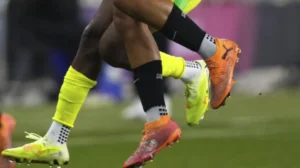
The NWSL’s new footwear sponsorship framework makes visibility on players’ boots a commercial matter for the league. Equipment makers other than Nike, the league’s official outfitter, will have to pay a fee to display their branding during league matches. They’ll also have to meet minimum cash investment requirements for players, tying the right to show a logo to a financial commitment beyond the league fee.
That arrangement puts a price on a small but recurring piece of match-day exposure. Boots appear in close-up shots, team photographs and game footage, so their branding can reach viewers even when the camera isn’t focused on a sponsorship board. The source doesn’t specify how fees will be calculated, what counts toward the minimum investment, or how the league will enforce the policy. Those details matter: without them, it’s hard to judge how burdensome the framework will be for different brands.
Why boot logos carry commercial weight
Footwear sponsorship has a different shape from a deal that puts a company’s name on a stadium or team shirt. A player wears boots throughout a match, and the product can be visible in action, in interviews and in post-match images. That gives equipment makers a direct association between their products and the athletes who choose them, while making the player’s own preferences part of the commercial picture.
For a league, that visibility can represent valuable inventory: a space that brands may want to pay to occupy. A league-wide framework can also give the NWSL a way to set common terms rather than leaving each appearance to informal arrangements. But setting terms has consequences for the brands already supplying players. If they must pay the league and make a minimum cash investment, the total cost of being visible could affect which companies decide to participate.
That’s the tension at the center of the policy. The league is treating player-worn branding as a resource it can govern, while equipment makers and players may see the boots as part of an existing commercial relationship. The source doesn’t describe the contracts or arrangements currently in place, so there’s no basis to say how the new framework will alter them in practice. The policy’s stated requirements do, however, raise a clear question about who controls the visibility attached to a player’s choice of footwear.
The player’s choice, and the logo-covering question
Announced June 29, the policy raises a practical question that can sound minor until it reaches the field: what happens when a player wants to cover a boot logo before kick-off? The source identifies that question but doesn’t give an answer. It also doesn’t say whether players will be required to wear particular boots, whether covering a logo will be permitted, or how a covered mark would be treated under the framework.
Those details affect how the rules work from a player’s point of view. A player might have a personal sponsorship arrangement, a preferred boot, or simply a product that suits their needs. The source doesn’t establish that any of these circumstances are at issue in the NWSL, but they illustrate why a branding policy needs clear procedures. If you're working in this space, the distinction between paying for visible branding and controlling which boots players can wear is one to watch.
(And this is the part most people overlook.) A rule can target what appears on camera while still raising questions about the product a player uses and the sponsor relationship behind it. The boot may be a commercial surface, but it’s also equipment worn through a demanding match. The policy’s practical meaning will depend on how the league handles that overlap.
What the framework may signal
This is more significant than it looks. By charging rival brands for boot branding and setting a minimum cash investment for players, the NWSL is drawing a line around commercial visibility that appears on the field itself. That may give the league a clearer way to manage sponsorship value, but it could also make participation more complicated for brands whose connection to players is built around footwear.
The framework’s impact will depend on specifics the source doesn’t provide: the size and structure of the fee, the level of required investment, and the rules for players who want to cover a logo. A flat requirement could affect a small supplier differently from a company with a broad sponsorship operation; that’s a general business consideration, not a claim about any particular brand’s position. Clear answers would help players, sponsors and the league understand what compliance actually means.
There’s also a communication challenge. If players and brands don’t know what’s allowed before match day, a seemingly simple rule could lead to inconsistent decisions about visible logos. The source doesn’t say whether the NWSL has published further guidance, so it’s too early to judge how those situations will be handled. For now, the central change is clear: rival footwear brands will need to pay the league for match visibility and meet minimum cash investment requirements for players.
That said, a fee alone doesn’t explain how the system will work. The answer to the boot-covering question may show whether the framework is mainly a way to price branding, or whether it also shapes how players and their footwear sponsors manage that branding. Until the league’s procedures are clear, the policy remains a commercial rule with a very practical test at the player’s feet. A logo, a fee, and a decision before kick-off.
The post NWSL demands footwear sponsors pay league a fee for players’ boot branding appeared first on Inside World Football.